
Choosing a 3D printer
Choosing a 3D Printer that is Right for You
Here at Print Your Mind 3D we are adamant about offering you a select number of 3D printers that are optimal for their target applications. Our view is that 3D printers, like all other tools, should produce at the highest quality possible with as few complications as possible along the way. Therefore, all of our 3D printers are of industry-leading, reliable brands. They all have an excellent build construction, reliable electronics and great support and community backup to ensure that you can use them for the long term. As an official Lulzbot and Ultimaker distributor, we are eager to show you what these machines can do.
Visual Models
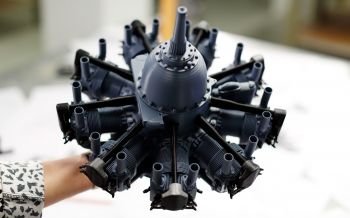
If your focus is on the visual quality of your models, all of our machines will perform great. Printers capable of dual extrusion with dissolvable support material however will be capable of more complex shapes and internal channels which are not possible on a single extrusion machine. In general, items which are purely aesthic with simple geomitries are best suited for printing in PLA filaments as it is economical, easy to print, and able to be printed on all of our machines.
Mechanical parts
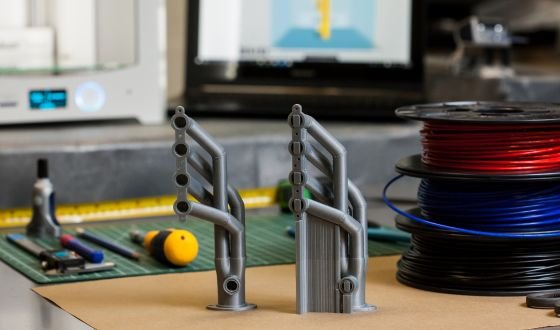
If your focus is on great mechanical quality, the Lulzbot machines as well as the Ultimaker S5, Ultimaker 2+ and Ultimaker S3 are capable of handling advanced engineering grade materials. If you opt for the TAZ Workhorse or TAZ Pro you benefit from the largest build volume, and Ultimaker offers extended versions allowing you to build tall objects. If you are looking to print in more advanced materials such as ABS, PETG, Nylon, CPE, Polycarbonate, Polypropelyne, or Flexibles then you want to make sure the printer has a heated bed and an extruder capable of reaching 240-270C.
Niche uses
Check out our guide below to find out which printer suits your specific needs. Some printers allow specific uses such as the portable Lulzbot Mini 2. The Ultimaker S5, Ultimaker S3 and Lulzbot TAZ Pro offer dual extrusion capability which is great for uses such as sculptural or architectural models where dissolvable supports save you a lot of post-cleaning work, and functional integrations such as flexible polypropylene parts creating hinges or snap-fits on concept models. For truly flexible material such as Ninjaflex, Lulzbot 3D printers can print with easy whereas the Ultimaker line can only work with semi-flexible materials like their TPU95A due to it’s bowden style extruder.
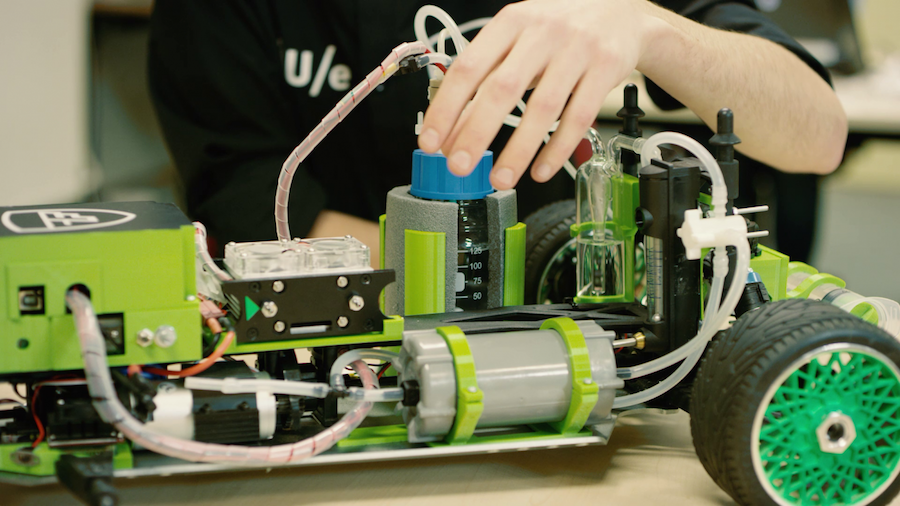
Ultimaker and Lulzbot are currently leading brands in the 3D desktop printer market, both trusted with great online community, support and spare parts availability. Yet the machines are built with some noticeable differences. Think of the Lulzbot as a swiss army knife, very versatile with the capability to modify components and use most available materials, whereas the Ultimaker brings you unbeatable print quality.

Print Volume & Print Bed
It is always important to consider the size of objects you will need to be able to print. You can compare a printers print volume to get a sense of the max size objects the printer is capable of. Smaller printers like the Lulzbot Mini 2 can print about 6-7″ in every dimension, while larger printer like the Lulzbot Taz printers and Ultimaker S5 have dimensions of up to 11″.
Lulzbot machines come with a PEI print bed surface, which adheres well to most filaments without the use of additional glue or tape. Another nice-to-have is that because its construction allows it, it has automatic bed leveling built in which automates the calibration process for you. This is a great feature for those just getting started and looking for more ease of use. This automated calibration process is a feature that the Lulzbot printers share with the Ultimaker S line.
Extruder type
Lulzbot machines are based on direct drive extrusion, where the driving gear feeding the filament into the nozzle is integrated into the tool head. This construction is slightly better for using different types of filaments but comes at the cost of surface quality and print speed because the extruder is heavier and exerts more momentum. It also makes tool heads interchangeable to install for example the SL or HS+ tool heads. Ultimaker machines keep the print head lightweight for accurate movements and high speed, while the bowden style extruder does struggle with very flexible filaments.

Direct drive extruder with the motor driving the filament located directly above the heated nozzle
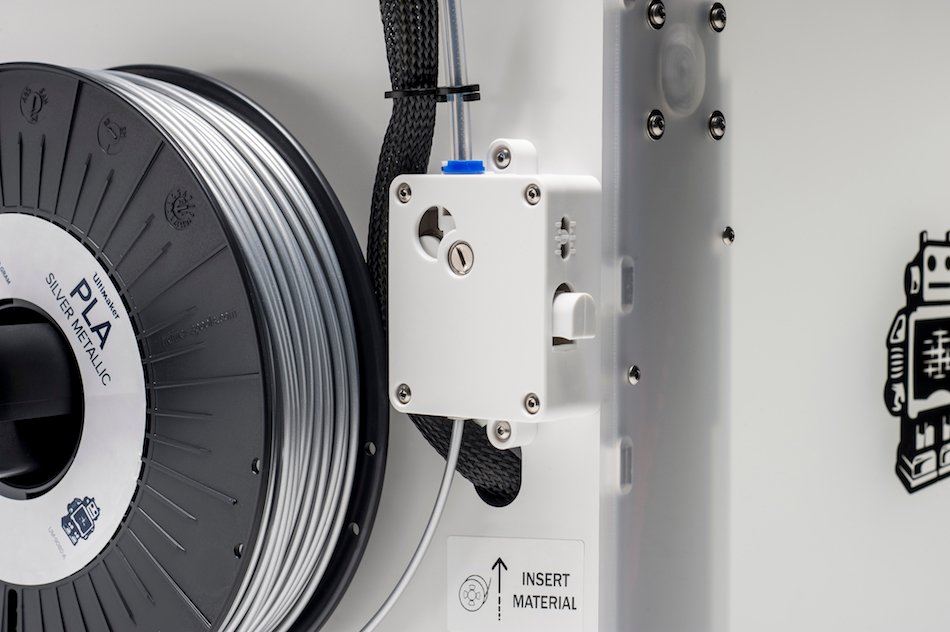
Bowden style extruder with the motor driving the filament located on the back of the printer
Housing
It is important to match your printer to the specific application you are looking to use it for. One thing to consider in this context is an open vs closed frame. Lulzbot printers have a very open frame which can be present challenges for some engineering materials or if you have many curious hands in a classroom environment. Ultimaker printers are more closed in their design which helps to control the airflow within the build area. Ultimaker devices are especially compact and allow a closed-box setup more suitable for the office and educational use.
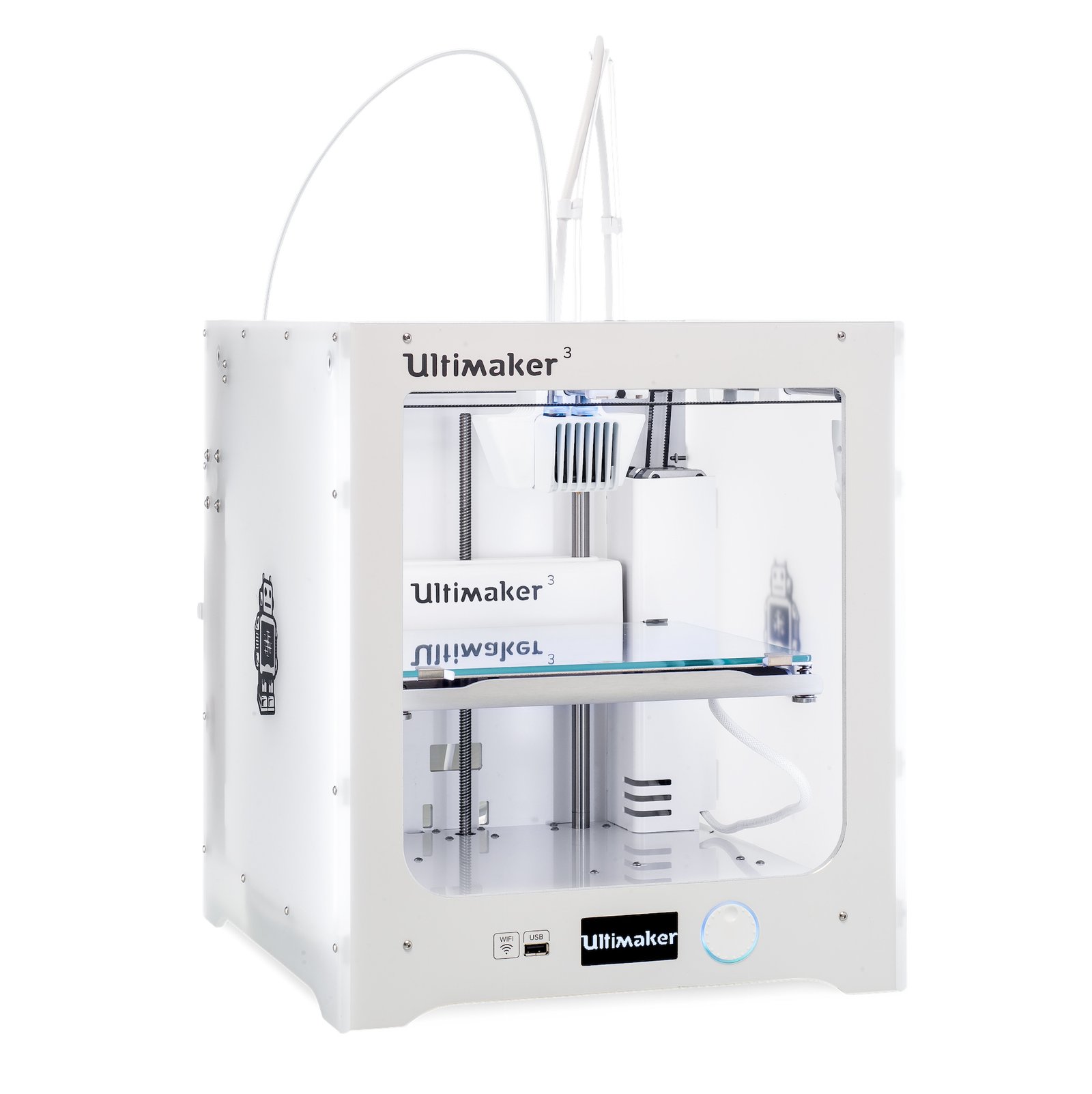
Ultimaker printers are closed on 3 sides which helps to control temperature inside the printing area
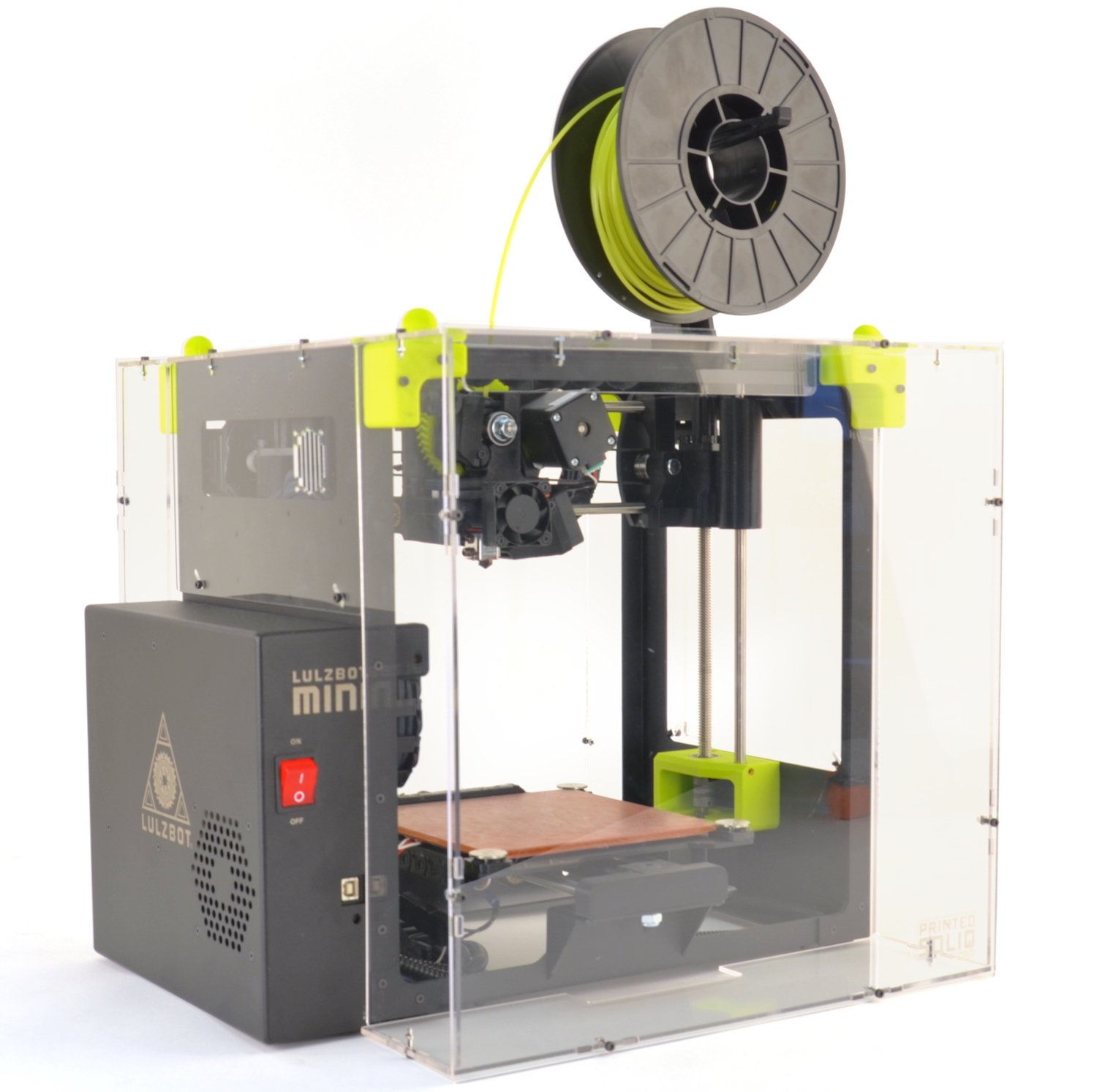
Lulzbot printers use an open style but have available upgrades like this enclosure to control temperature