
How to choose the best 3d printing filament
Choosing a Filament that is Right for You
At Print Your Mind 3D our mission is to have you optimally set up to fulfill your 3D printing needs with minimal effort and maximum long-term results. PLA is the standard filament choice for people and businesses that start with 3D printing, but there are many other available options in our store. Which filament you need to choose depends mainly on your target application and your production environment:
Visual Models
When it comes to printing parts which are purely aesthetic, for testing things like fit and form, or if the print won’t be exposed to any heat or stress, PLA is the industry standard. PLA is one of the easiest materials to print with and also the most economical. PLA is not a great material choice if you need temperature or chemical resistance, or if the part with be exposed to tensile forces.
Mechanical Parts
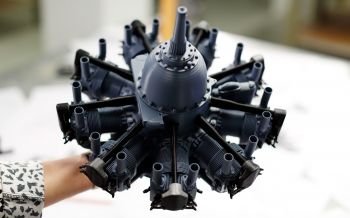
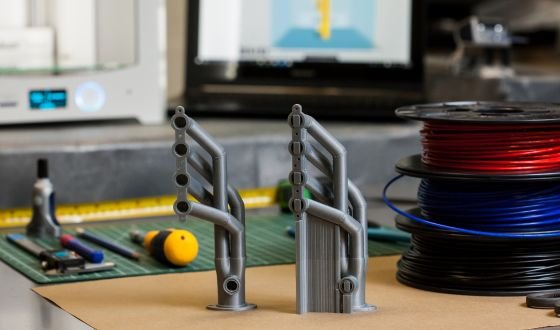
Mechanical applications require a heavier duty material choice. ABS used to be the standard choice but requires a dedicated printing environment. A great alternative to ABS is PETG because it offers higher strength and temperature resistance, without the downfalls of ABS such as its strong smell and tendancy to warp.
Nylon is another great material option for mechanical parts with the added benefit of being slightly more flexible and also chemical resistant.
For higher temperature applications, where the prints will be exposed to ~60-100C, you will want to look to materials such as Polycarbonate, CPE+, or Taulman BluPrint.
Flexible
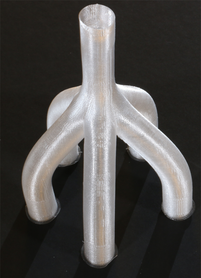
Our standard choice for flexible material Ninjaflex which prints very well with the additional Flexystruder on Lulzbot printers. Ultimaker printers can use TPU95A which offers a semi-flexible printing option. For a premium alternative, PCTPE has superior strength and a satin appearance making it exceptionally suited for wearable applications.

Niche Applications
Specific use cases require selective material choices. Only certain materials can meet challenging demands for applications like medical use, foodgrade, outdoor applications, and high impact uses. We will reccomend some to consider for each of these:
Medical – Gu!dline, T-Lyne
Outdoor applications – ASA
High impact – TPU95A, PCTPE, Ninjaflex
Print Your Mind 3D PLA
Diameter 1.75mm or 2.85mm +/- 0.05
Roundness +/- 0.03
Print Temperature 210°C
Heated Bed 60°C (optional)
Print speed 40-120 mm/s
Density 1.25 g/cm3
Elongation at Break 6%
Glass Transition 60°C
Impact Strength 96 J/m
Flexural Strength 62 MPa Max.
Water Absorption 6%
Applications Toys, visual models, aesthic prints
Flexibility ☆
Strength ☆☆☆
Durability ☆☆☆
Ease-of-use ☆☆☆☆☆
Aesthetics ☆☆☆
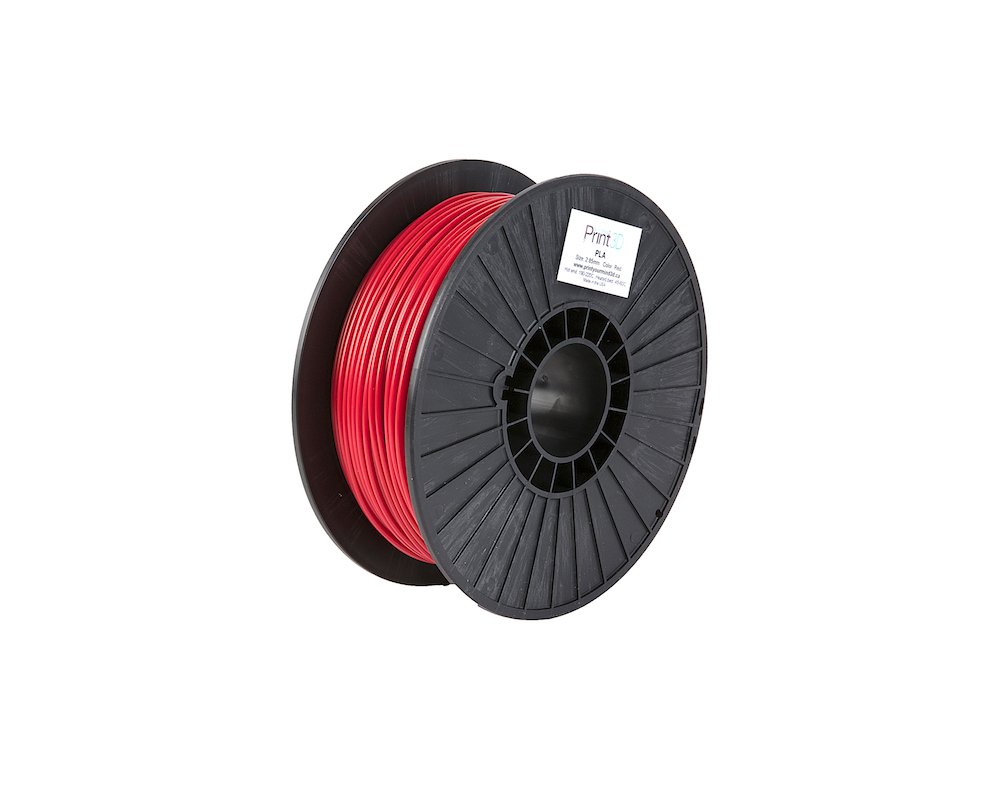
PLA is our most popular material, and for a reason. It is a nontoxic, bio-degradable material with a semi-sweet smell derived from renewable resources such as corn starch or sugar cane. It has a good blend of strength and flexibility, hardly deforms during printing and performs very well on all 3D printers. It adheres well to your heated glass print bed or PEI surface. Be sure to print with help of blue tape or additional glue spray or hair spray for non-heated beds. PLA tends to absorb water moisture when exposed to ambient air, and as a result becomes brittle. Store it in a cool and dry place, according to our guidelines in ‘How to properly store your 3D printing filaments.’
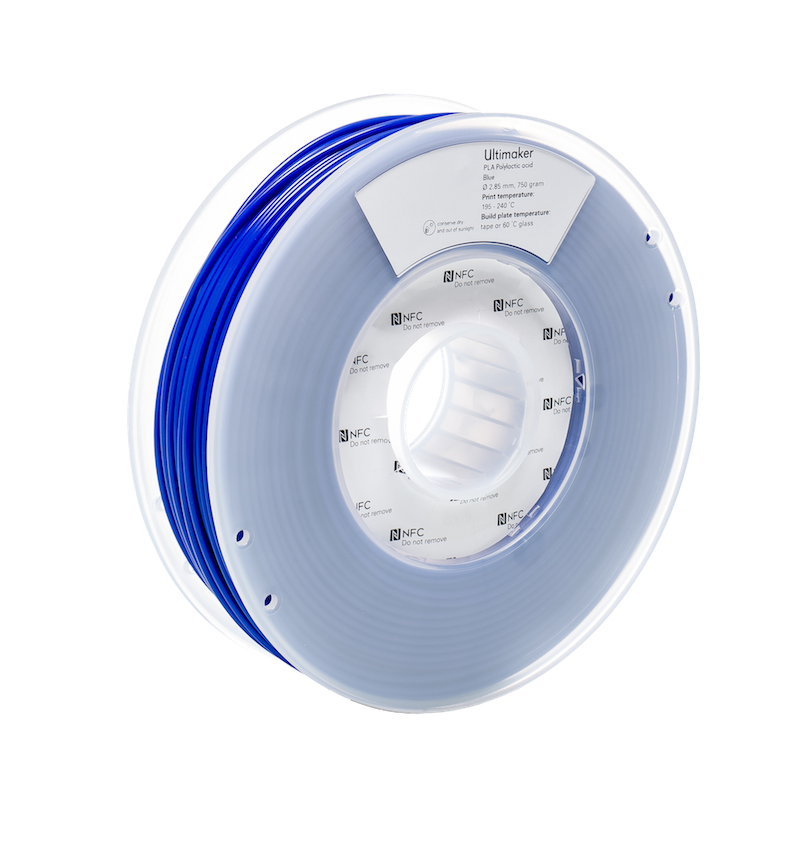
Ultimaker PLA is dedicated for optimal performance on Ultimaker machines such as Ultimaker 3, Ultimaker 3 Extended, Ultimaker 2+, Ultimaker Extended 2+ and Ultimaker 2Go. It will also print well on other 2.85/3.00 mm compatible printers including Lulzbot. Choose this filament if you need just that superior visual quality. This material adheres well to cleaned glass and PEI build surfaces.
Ultimaker PLA
Ultimaker PLA
Diameter 2.85 +/- 0.10
Roundness +/- 0.10
Print Temperature 190-210°C
Heated Bed 60-70°C (optional)
Print speed 40-120 mm/s
Density 1.24 g/cm3
Elongation at Break 3%
Glass Transition 60°C
Impact Strength 96 J/m
Flexural Strength 62 MPa Max.
Water Absorption 6%
Applications Toys, visual models, aesthetic prints
Flexibility ☆
Strength ☆☆☆
Durability ☆☆☆
Ease-of-use ☆☆☆☆☆
Aesthetics ☆☆☆☆