
How to make money with a 3D printer

How to make money with a 3D printer
If you own a 3D printer, you may not be using it to its full potential printing the occasional nick nack. 3D printers are powerful machines that have the ability to rapidly prototype physical models. These can save companies thousands of dollars and weeks of time in the development phase. This article aims to show how you can turn your hobby into a business. Here are some tips for how to monetize your 3D printer.
Stand Out
Especially if you are in a metropolitan area, there will likely be several 3D printer owners near you. This is why you need to find a specific niche of 3D printed items to specialize in for a selected customer base, as well as a strategy to reach them. From our experience, those who take the approach of “we can print anything” end up getting less work than those who take a more focused approach at a specific niche. Find ideas for a few different niche areas below:

Prototypes and Marketing Samples
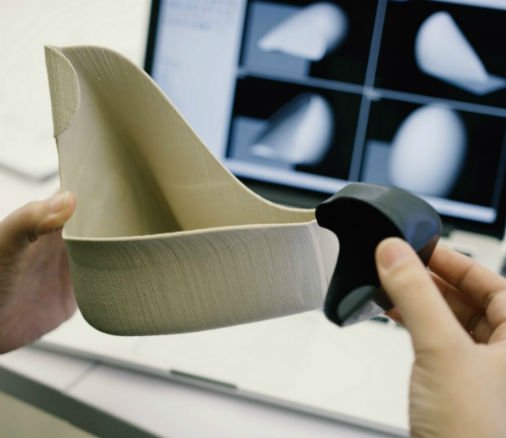
This makes up almost a quarter of all global 3D printing. Even a simple desktop-based 3D printer allows you to create visually appealing and durable parts very suitable for professional use. If you are looking to create functional prototypes, you want to ensure your printer is capable of printing higher strength and higher temperature materials like ABS, PETG, Nylon, Polycarbonate, or other specialty materials. These generally require a heated bed and a hot end capable of up to 280C. This empowers you to create prototypes and marketing samples for businesses who prefer an expert taking care of the job rather than doing it in-house. So you can make extra fees right from your desk at home or even at your full-time job with small footprint machines. You can also set yourself apart by choosing a printer that is capable of larger build volumes. Traditionally, the majority of desktop machines print within an 8″ x8″ x 8″ space so getting a machine that can print larger than this can give you a leg up.
Learn how 3D printing is used in different industries such as engineering, manufacturing, architecture and more!
Where can I find my first customers?
As demand for 3D printing of parts increases, so to does the number of platforms that connect customers to printing services. Here are a few places to help you find your first customers:
Freelancing Platforms – On websites such as Guru (1.5M users), Freelancer (17M users), Outsourcely, and Upwork (17M users) you are able to connect to businesses who will hire you to do 3D printing services. Overall these are more oriented to professional research and development services so you need to have a decent know-how about the design and engineering side of your work to be valuable to customers. Sometimes you will be asked to sign a legal non-disclosure agreement so having a 2D printer + scanner is also a valuable asset. These platforms are very simple to use and are great to establish long term relationships with clients. The disadvantage is that you are restricted to communication over the platform and there is a fee involved for each payment.
3D Printing Bureaus – Large agencies such as i.Materialise and Shapeways have a pool of designers that create 3D models for their customers. Through forums and e-mails you can come into contact with potential clients that often will pay well for high quality models and prints. At Shapeways it is also possible to elaborately set up your own shop to sell your 3D models and even make them customizable. This is great for applications requiring high visual detail such as jewelry, scale models, figurine sculpts and fashion accessories.
3D Printer Hubs – Enlist your 3D printer as directly available on platforms such as 3DHubs, Treatstock and MakeXYZ. After you set up your profile page, you can enter all the details of your 3D printer, including your filaments, and customers will be ready to place an order. Pricing settings on 3DHubs are especially extensive as you can set pricings per material volume but also for additional features such as detail level and build volume. Treatstock and MakeXYZ also enable you to setup a shop for your 3D models and finished prints. These platforms are a great way to attract your first customers and the only cost is a percentage of each sale. That way, if you and your printer aren’t making money, it won’t cost you anything.
3D Model Marketplaces – Websites for selling 3D printable models are CGtrader, Pinshape, MyMiniFactory, Cults3D, Turbosquid, and Skrimarket. These allow you to upload and present your products in several formats and set a price that in some cases is negotiable. Some platforms will only allow you to share your models for free but this can offer an opportunity for extra exposure. You can base your monetized work on existing models such as from Grabcad or Thingiverse, but make sure that you are not violating the creative license and ideally obtain written consent from the model owner. Some websites offer design contests and 3D modeling assignments as well if you want to make some extra income, and if you are into 3D scanning, you can join MyMiniFactory’s ScanTheWorld initiative and derive a small fee per scanned object.
Art Marketplaces – The largest marketplace to sell your personally created goods is Etsy, so you can easily create your customized shop and start making money. This is a great platform if you have an item you designed yourself and you want to sell the 3D printed item online. We have seen many stores having success with items such as lithophanes, lamp shaes, keychains, and more. The downsides are that Etsy takes a small fee per sold item and it is a very competitive marketplace so you have to keep your margins low. Alternatively, you can open a store on Bonanza, Storenvy, or eBay.
Kickstarter Platforms – You need a great new product idea to start a small business through kickstarters since you are going to need to attract backers. But even for simple products, these are great platforms to get your ideas to a sizeable market and start generating revenue. Reaching out to other startups with your 3D printing service is a good idea as well since having a prototype is now a requirement for every Kickstarter campaign.
Sources:
1. D Printboard, www.3dpb.com
2. 3D Printing Industry Statistics. www.statisticbrain.com/3d-printing-industry-statistics/
3. 3D Printing Trends. www.3dhubs.com/trends/
4. Bing Places for Business. www.bingplaces.com
5. Bonanza, www.bonanza.com
6. Brownbook, www.brownbook.net
7. CGTrader, www.cgtrader.com
8. Cults, www.cults3d.com
9. eBay, www.ebay.com
10. Etsy, www.etsy.com/sell
11. Facebook Business, www.facebook.com/business/
12. Freelancer, www.freelancer.com
13. Google Business, www.google.com/business
14. Guru, www.guru.com
15. Hotfrog, www.hotfrog.com/AddYourBusinessSingle.aspx
16. Hubstaff Talent, talent.hubstaff.com/signup
17. i.Materialise, www.i.materialise.com
18. Indiegogo, www.indiegogo.com
19. Kickstarter, www.kickstarter.com
20. LinkedIn, www.linkedin.com
21. MakeXYZ, www.makexyz.com
22. Outsourcely, www.outsourcely.com
23. Pinshape, www.pinshape.com
24. ScantheWorld, www.myminifactory.com/scantheworld/
25. Sculpteo (2017) The State of 3D Printing, annual report.
26. Shapeways, www.shapeways.com
27. Showmelocal, www.showmelocal.com
28. Skrimarket, www.skrimarket.com
29. Storenvy, www.storenvy.com/shop/?q=3d%20printed
30. Treatstock, www.treatstock.com
31. Turbosquid, www.turbosquid.com
32. UPS (2016) 3D Printing: The Next Revolution in Industrial Manufacturing. NEW RESEARCH FROM UPS AND THE CONSUMER TECHNOLOGY ASSOCIATION (CTA). https://www.ups.com/media/en/3D_Printing_executive_summary.pdf
33. Upwork, www.upwork.com
34. The Real Yellow Pages, www.yellowpages.com
35. Yelp, biz.yelp.com/
36. Yext, http://www.yext.com